Connecting individuals and communities to promote sustainability actions
Discover How to Get Connected
Hear Sustainability Stories
Watch a Message From One of Our Connected Communities
Practical Tools
Communities You Can Follow
About Climate Connected
This project is building an easy to use set of tools that support people and communities to take the steps needed to help reduce climate change. There are supports to build a ‘decarbonisation’reducing the amount of Carbon Dioxide emissions committee in the community making plan for the local area to reduce carbon emissions. This also includes supports to help get people in our communities more involved in finding out how what we do in our everyday life that increases or decreases the amount of carbon we emit.
About Climate Connected
This project is building an easy to use set of tools that support people and communities to take the steps needed to help reduce climate change. There are supports to build a ‘decarbonisation’reducing the amount of Carbon Dioxide emissions committee in the community making plan for the local area to reduce carbon emissions. This also includes supports to help get people in our communities more involved in finding out how what we do in our everyday life that increases or decreases the amount of carbon we emit.
Use our Connected Resources

Build a Community Structure
Getting an effective team together is a vital step in the community journey to sustainability. We have broken down the actions and resources needed to do this into five key areas where you can build your capacities and skills.

See Success Stories From People & Communities
Some communities and individuals, just like yours have already made great progress on the journey to sustainability, you can see these stories here. Keep in touch and soon you or your community could have it’s own decarbonisation story to tell

Discover Your Carbon Footprint
Our Carbon Footprint tool is currently in development by Energy Co-operatives Ireland Ltd and Galway University. Please join our mailing list and we will let you know when it is ready to use. In the meantime find out about the sustainability impact of your behaviour choices

Make Valuable Connections
Get more people from your community involved in sustainability. Our dialog tool shows you how to get more people talking to eachother and how you can increase how local people become active in making sustainability happen.
Listen to our Podcast series with advice from sustainability community activists on how you can make a difference in your community
Latest Podcast #6:
Effective climate action begins by listening
Listen Here
You can find transcripts and links to relevant resources for each podcast on our PODCAST PAGE
Podcast 5
a supportive local ‘ecosystem’
James describes how a Resource Centre is a hub for the community to find resources and make connections to help kickstart sustainability actions: find yours and start your own action. Listen On…


Podcast 4
The Local Strengths Approach
Carol Loftus describes the journey of Mulranny from a fading tourist spot to a thriving model of community-driven sustainable development. She outlines how projects emerged, how local people were mobilised. Listen On…
Podcast 3
Participation and Engagement
Seán from Mulranny discusses how community action is possible through a structured model of deep community engagement, respectful collaboration, and strategic coordination. Listen On…
Podcast 2
Co-ops in Europe
Stephanie explains how in her work for Aran Island’s Energy Co-operative, Comharchumann Fuinnimh Oileáin Árainn, she meets co-ops around Europe. She tells us how we can learn from them. Listen On…
Podcast 1
A strong foundation
There are different types of community organisations. Dara and Avril from Comharchumann Fuinnimh Oileáin Árainn explain why they chose a co-op approach. Listen On…
Our latest Sustainability Success Stories from Communities
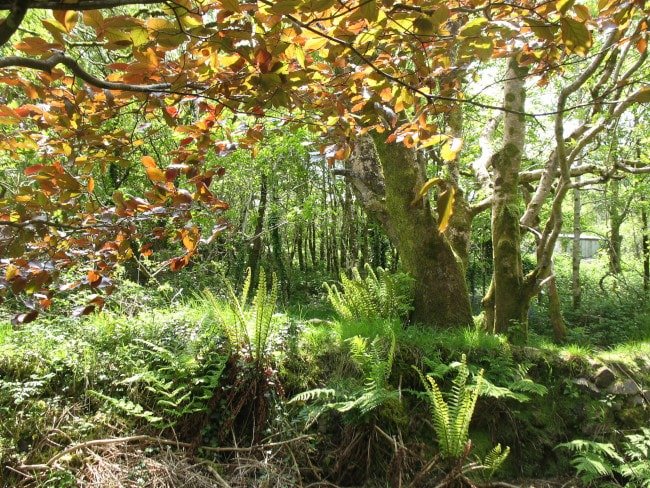
Kerry Earth Education Project’ (KEEP)
From a small organic farm in Ballyseedy a much larger inspirational education project has grown. Ian and Eileen spread the message of permaculture
and sustainable farming. Their farm not only produces healthy food, it also gives spaces where nature can live and grow. They then show how others can follow this sustainable example that cares for people and nature.

Aran Islands DZ (Ceantar Dhícharbónú na hOileáin Árainn)
Galway County Council identified na hOileáin Árann as their decarbonization zone. It is made up by three islands at the mouth of Galway Bay, off the west coast of Ireland, with a total area around 46 km2. From west to east, the islands are Árainn (Inis Mór), which is the largest; Inis Meáin, the second largest; and Inis Oírr. There is a population of 1,347 (as of 2022) and the area is designated as an official Gaeltacht.
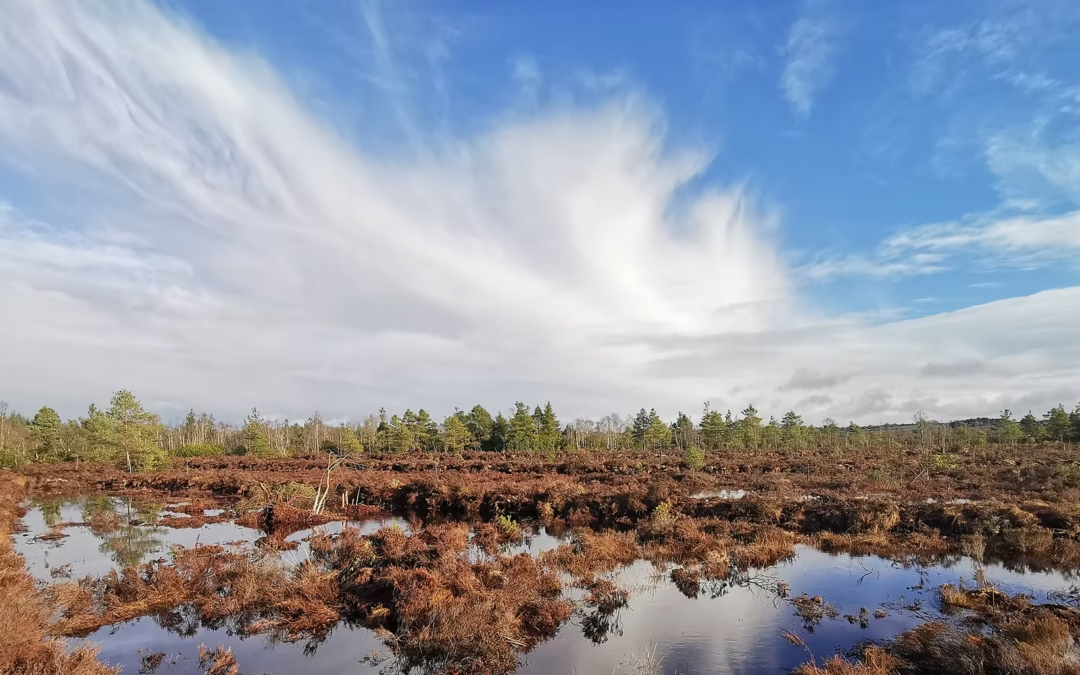
Abbeyleix Bog Project
A local community saw that their bog was being harmed by commercial harvesting of peat for horticulture. They believed this was not in the best interests of local nature and biodiversity. They began a campaign that took eight years to protect the bog with the agreement of the owners. The active raised bog habitat increased by 1,130% from 2009 to 2020. They created a vital local amenity for the community and its visitors.
Investigate our case studies
Sustainability Stories from Individuals
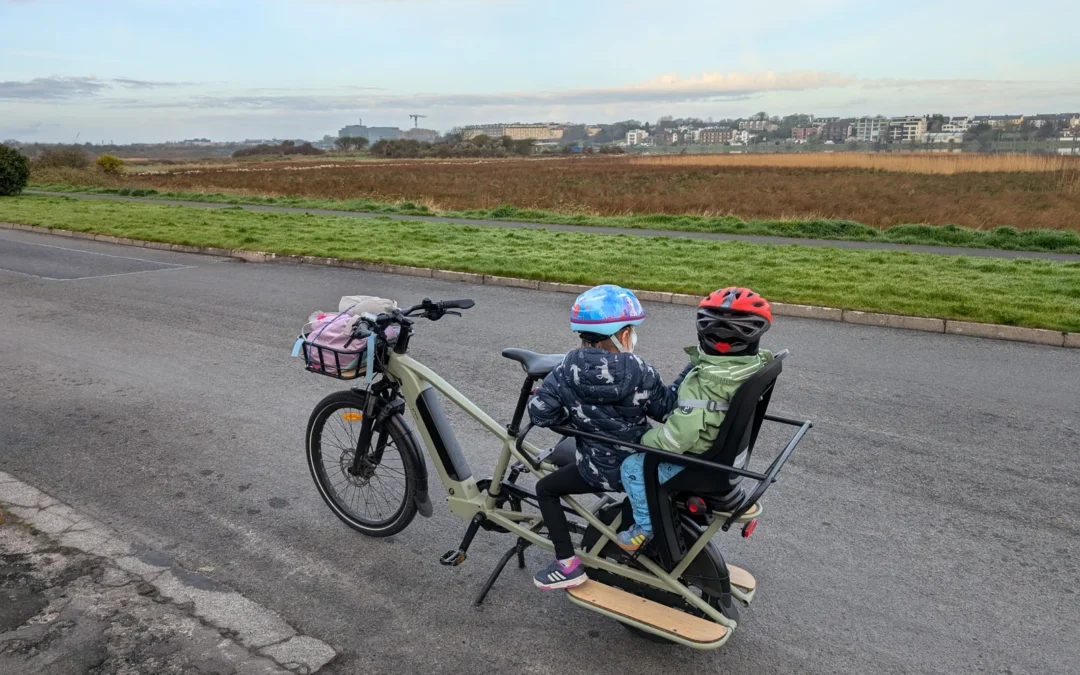
We didn’t really need that second car
The benefits are both immediate, sustainable and you send a clear signal of sustainability, environmental consideration and an active lifestyle to your kids. They will then, hopefully, be more likely and more comfortable making these types of decisions into the future – which they will very likely be forced to do anyway in the coming years to mitigate climate change.
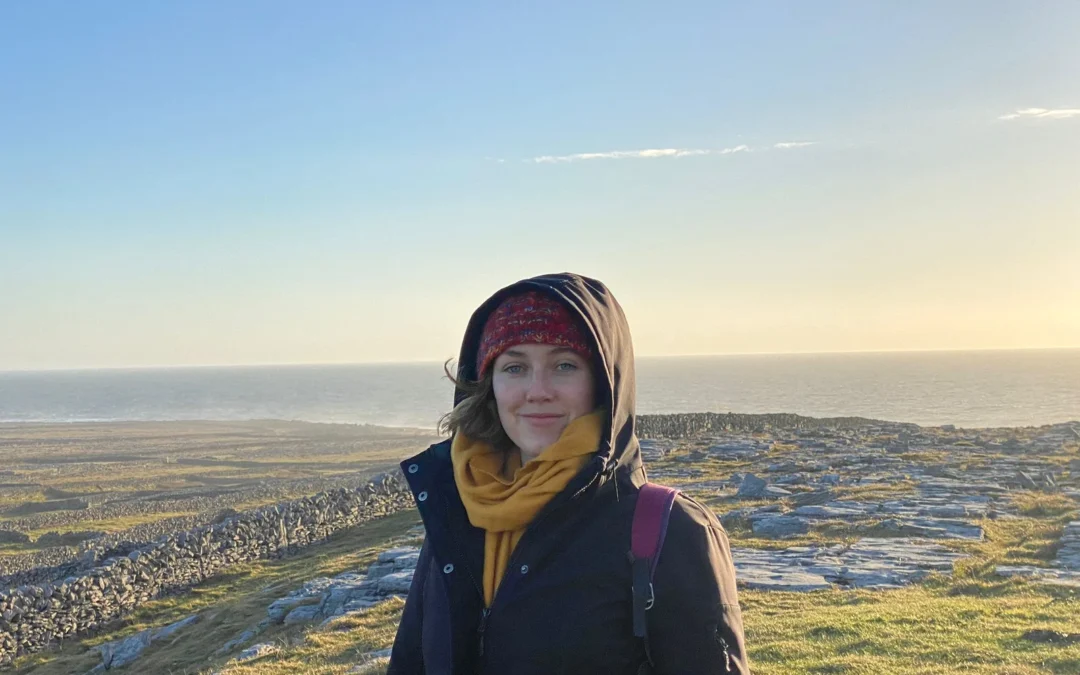
Cíara and Keep Cup Campaigns
The impact of my action has been a reduction in my carbon footprint and control on the amount of single-use waste that I produce. For example, if I go out to work 5 days a week for 48 weeks of the year, buy a takeaway coffee, a plastic bottle of water and dispose of them in a public landfill bin each day of my commute, I will have disposed of 240 single use coffee cups and 240 single use plastic water bottles in landfill. By making an effort to carry reusable utensils, that number can be zero!
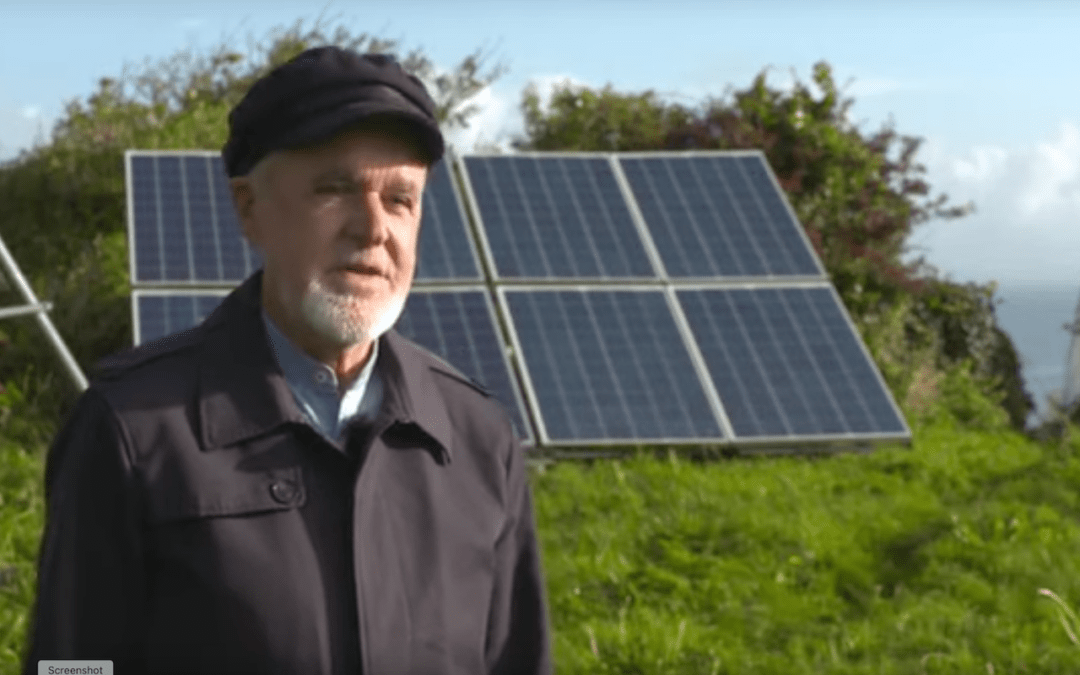
Dara, installed PV at his home.
In October 2013 we installed 2 kW of Photovoltaic panels (8 panels) ground-mounted at our home. At that time, we also installed a 5kW heat-pump. In September of 2023, we installed a further 2 kW of Photovoltaic panels, making it 4kW in total. The total electricity...

Aoife, Cork, decided that if she wanted to spend money in town she would cycle and not drive
Last year I got a bike from the cycle-to-work scheme. I decided that if I wanted to spend money in town I would cycle in and not drive.
Connected Partnership