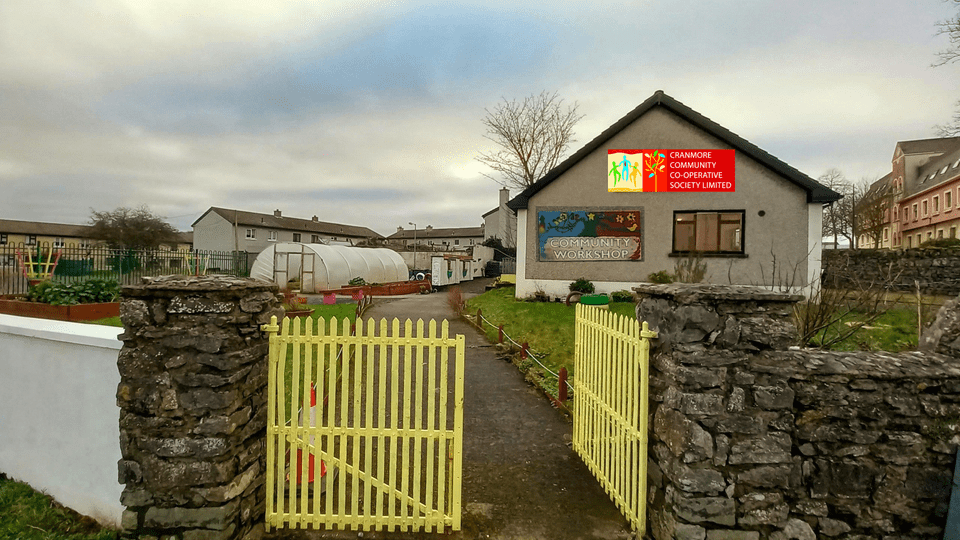
Crannmore Co-operative Community Spaces which include a workshop and garden, a community pizza oven and a cafe.
HIGHLIGHT:
The Cranmore Community Co-op proves that effective climate action begins by listening carefully to local residents. Instead of imposing pre-designed projects, the team visited roughly 400 homes to understand genuine local needs through surveys leading to direct conversations. The feedback directly shaped all future initiatives.- Start small, focus on local demands, and scale up gradually.
- Young people led hands-on projects like building a pizza oven, painting murals, and organizing clean-ups to build local pride.
- Communicate with Regular newsletters, public forums.
- Dedicated volunteers drove the projects forward, while collaborations with local authorities boosted available resources.
Effective climate action begins by listening



Cranmore Community Co-op: Building Community-Led Climate Action
The Cranmore Community Co-op evolved from the Cranmore Regeneration Project, initiated by Sligo Borough Council in 2004 to ensure local residents had a voice in the regeneration of their neighbourhood. Originally established as a community platform, the organisation became a fully incorporated cooperative in 2007, developing into a community development and youth organisation serving both Cranmore and the wider Sligo East area.
A defining moment came in 2019 when the Co-op carried out a comprehensive door-to-door Community Needs Analysis, visiting approximately 400 households. Rather than assuming what people needed, community development workers spoke directly with residents, identifying priorities such as affordable social spaces, opportunities for children and young people, environmental initiatives, and places where neighbours could meet and connect.
Importantly, the Co-op communicated the survey findings back to residents and used them to shape future projects. This community-first approach created trust and ensured that new initiatives reflected local aspirations rather than externally imposed ideas.
In 2021, the Co-op took over an existing workshop and garden, transforming it into a vibrant community hub. Today it includes a community café, weekly restaurant, kitchen facilities for local enterprises, community gardens, orchard, biodiversity areas, workshop space and youth facilities. The site has become a welcoming place where climate action, education, wellbeing and community development are delivered together.
Council Support
Sligo County Council played a crucial enabling role throughout Cranmore’s development. Rather than directing projects, the Council provided long-term support, resources and technical expertise while allowing the community to lead decision-making.
Core funding for the Co-op is provided through the Cranmore Regeneration Project under the Department of Housing, Local Government and Heritage, giving the organisation the stability needed to build long-term relationships and programmes.
The Council also partnered with the Co-op on a range of practical initiatives. Through the Local Authority Waters Programme, young people designed and created a mural promoting water conservation. The Co-op worked with Council staff on biodiversity education, climate awareness programmes, and practical environmental improvements including a pilot dog litter bin scheme requested by residents.
As part of Sligo’s Decarbonisation Zone, the garden became a demonstration space where Council environmental officers delivered workshops on composting, recycling, brown bins and sustainable gardening. This partnership enabled expert advice to reach local people in an accessible community setting.
The interview illustrates an effective model of partnership: the Council provided funding, expertise and strategic support, while local residents identified priorities and shaped the projects themselves.
Achievements
Cranmore’s greatest achievement has been creating a thriving community hub where climate action strengthens community life rather than existing as a separate agenda.
The community garden has become the centrepiece of this work. Volunteers grow vegetables, herbs, fruit and flowers using organic methods, while compost produced on-site is returned to the gardens or shared with residents. Produce is used in the community café, weekly restaurant and youth cooking activities, demonstrating sustainable local food systems in practice.
Young people play an active leadership role. They helped design and build a community pizza oven during the COVID-19 pandemic, transforming concerns about young people “hanging around” into a positive project that now benefits the whole community. Youth groups also participate in planting, harvesting, biodiversity activities, litter-picking campaigns, windowsill gardening projects and environmental education.
The Co-op has successfully combined environmental action with social inclusion. Gardening, café activities, workshops and community events bring together people of different ages, cultures and backgrounds, reducing isolation while building friendships and trust. More than twenty regular volunteers now contribute to maintaining the gardens and supporting community activities.
The garden has also become an outdoor classroom where residents learn practical climate actions including composting, biodiversity conservation, food growing, water conservation and waste reduction. Rather than focusing solely on climate change as a global challenge, the Co-op demonstrates simple actions that people can adopt in their own homes and neighbourhoods.
Perhaps most importantly, the organisation has helped build a strong sense of community ownership. Residents increasingly take pride in their neighbourhood, contribute ideas, volunteer their time and develop the confidence to shape future improvements.
The activists’ takeaway
- Listen before acting. Conduct a community needs assessment through surveys, conversations or community forums to understand what local people genuinely want. Building projects around community priorities creates lasting engagement and ownership.
- Secondly, start small and grow gradually. Cranmore began with achievable projects that addressed immediate needs before expanding into wider climate and biodiversity programmes. Early successes help build confidence, attract volunteers and demonstrate visible benefits.
- Create welcoming spaces. Community gardens, cafés and workshops provide informal places where relationships develop naturally. Climate conversations are often most successful when they happen through practical activities such as growing food, sharing meals or learning new skills together.
- Another important lesson is to communicate regularly. Cranmore uses newsletters, community events, forums and face-to-face engagement to keep residents informed and involved. Closing the feedback loop by showing how community suggestions have influenced decisions helps build trust.
- Finally, build partnerships without losing community leadership. Successful collaboration with local authorities, schools, environmental organisations and volunteers can provide funding, expertise and additional resources. However, the direction of projects should continue to come from the community itself.
Visit our library of community stories

Search Community Stories By Map

Visit our library of community stories
Search Community Stories By Map