How you consume: Food
Answers should be based on your own personal consumption patterns
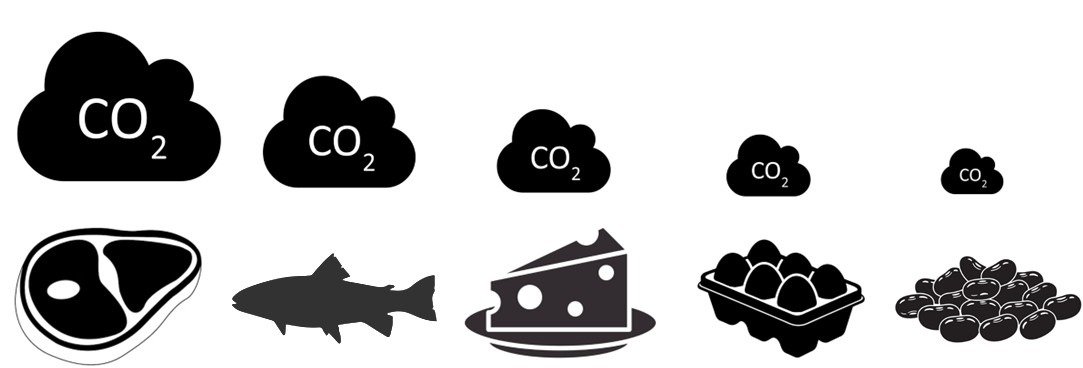
How does our diet affect our CO2 footprint?
According to the ESRI:"People do not yet understand how what they choose to eat affects climate change, according to new ESRI research. When invited to list which everyday behaviours contribute to their carbon footprint, just 1-in-25 adults mentioned their diet. Any references to food were more likely to be about where it came from or how it was packaged than whether meals contain foods linked to high emissions, such as red meat."
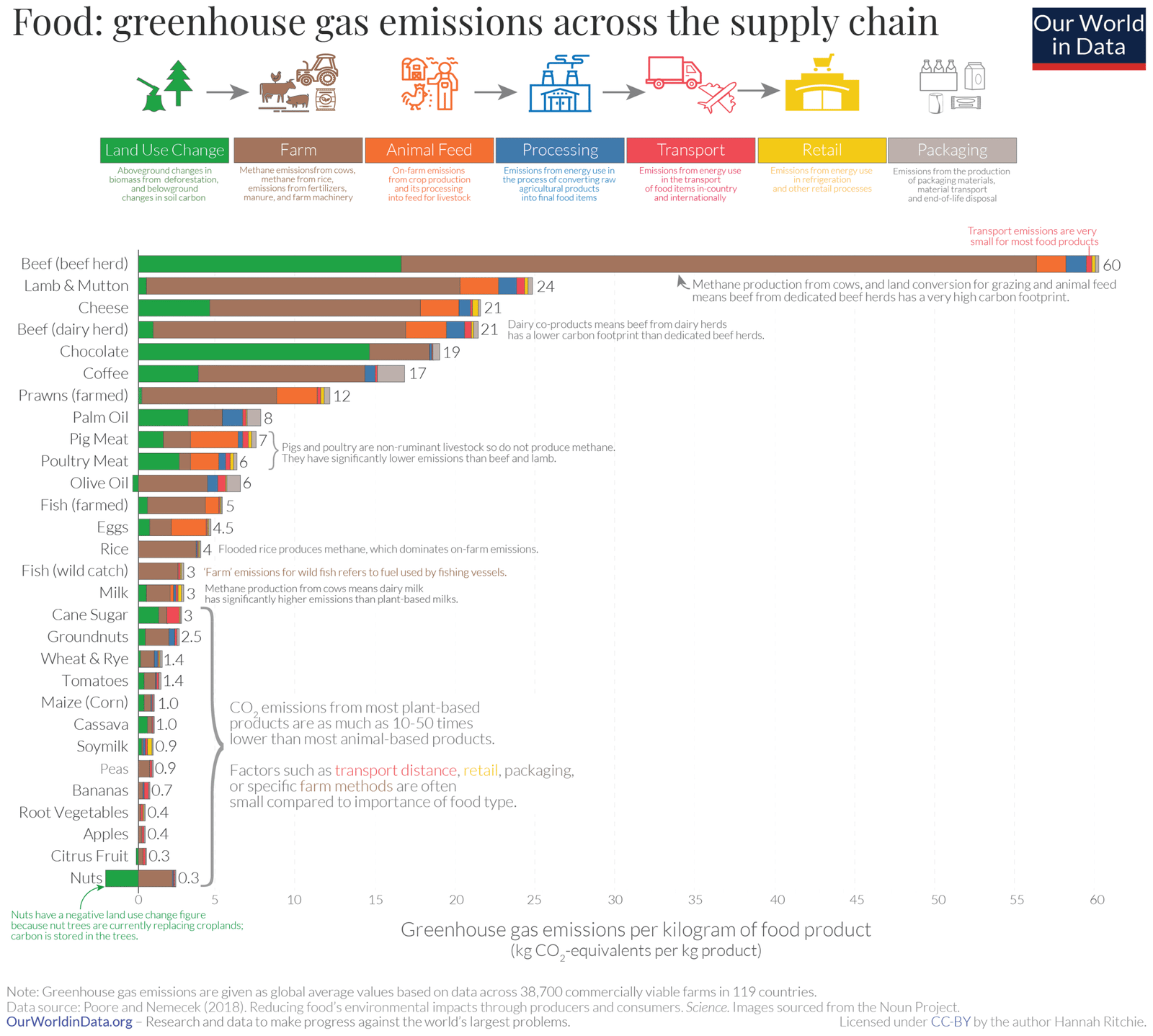
About a THIRD of global greenhouse gas emissions are linked to food - most of this comes from farming practices and land-use (and not so much from food-miles - see below). Farming practices that create greenhouse gases include:
- methane from the digestive processes of animals ☁
- nitrous oxide from fertilizers,
- carbon dioxide from cutting down forests for more farmland,
- emissions from manure management, rice growing, burning of crop left-overs, and the use of fuel on farms.
Farming is a very important part of Ireland's economic and cultural life and so should be supported by us all: but there are lots of different crops, and ways to farm. See some of these here
How much do 'food miles' add to my CO2 footprint?
Well, according to most scientific research, not that much. Nearly all the food that travels between countries is transported by sea in containers on large container ships. These ships are carrying vast amounts of other products: cars, equipment...pretty much everything you can imagine. Food is, generally, a small amount of this, and whenever it is the only thing on board, like mass shipping of grain, it's in the thousands of tonnes - so it's a fairly efficient process (look at the graph below to see what proportion of the foodstuff comes from transport. So as long as it's not flown by jet from across the world (in which case it costs a fortune!), it's more about what it is than where it's from.
However there are very good reasons for buying as much food as possible according to these aims: Sustainably Farmed - Locally Produced - Irish Made - Low Processing. These will help food producers who are trying to make a difference, it will support our neighbours and community, it will protect our economy, and it will be good for our health. Our results page will show how you can do this